
How Much is the Average Down Payment for a House?

Let’s talk about how much is the minimum down payment to buy a house right now in 2024 with different loan programs. So if you’re wondering “how much do I need to save for a down payment”, you can know right away. I’m going to make this guide super easy to understand, so let’s dig into the details. See today’s mortgage rates in for first-time homebuyers in Georgia. Start here – () FHA Minimum Down Payment Whether or not you are a first-time homebuyer, the FHA loan is one of the easiest loans to qualify, and it requires a low down payment from borrowers. One of the great features of an FHA loan is its relatively low down payment requirement. The minimum down payment for an FHA loan is just 3.5% of the purchase price. For example, if you’re buying a home worth $300,000, your down payment would be $10,500. Don’t have 3.5% for a down payment but still want to get an FHA loan? Well, FHA allows for the combination of many down payment assistance programs (DPA) that can help you get into a house with $0 or very little money out of pocket. These programs can be in the form of gifts, grants, or even forgivable loans. More on this later! Conventional Loan Minimum Down Payment Conventional loans are the most common types of mortgages available. In fact, over 62% of homebuyers in 2020 used a conventional mortgage to buy a house. If you are a first-time Homebuyer, the minimum conventional loan down payment is 3%. So, if you are buying a $400,000 home, you’d need $12,000 for the down payment. However, if you have owned a property in the last 5 years, or currently own one and you are looking to move into a new home as your new primary, the minimum down payment is 5%. Therefore, if you are buying a $400,000 home, the minimum down payment would be $20,000. Find the best first-time homebuyer program in Georgia for your situation. Start here: () Minimum down payment for an investment property The previous section mentioned that the minimum down payment for a conventional loan is 3% for first-time homebuyers. But what if you are looking to get a mortgage to invest in real estate and you are wondering what is the minimum down payment for an investment property with a conventional loan? Ok so if that’s the case, the minimum down payment for a conventional loan when purchasing an investment property is 15%. This means that for a $400,000 home, the down payment would be $60,000. Just so you know, most investors who buy investment homes put 20-25% down payment. The most common down payment for an investment property is 20%. Although you can get an investment loan with 15% down, know that your interest rate will be much higher, and you may also have to pay higher origination fees as well. Truth is, there is more risk to the lender when an investor is only putting down such a low down payment. In fact, most lenders don’t even allow for a 15% down payment for an investment property. Here at Andes Mortgage, we do have programs that allow you to get into an investment home with 15% down. What is the minimum down payment to avoid paying PMI? If you are getting a conventional loan, the minimum down payment to avoid paying private mortgage insurance (PMI) is 20%. PMI is an additional monthly cost that is added to your mortgage payment if you put down less than 20% on your home purchase. It protects the lender in case of default. However, once you reach a certain amount of equity in your home (usually 20%), you can request for PMI to be removed from your loan. For example, let’s say you purchased a $400,000 home with a conventional loan and only put down 10% ($40,000). With this scenario, you would have to pay PMI on top of your mortgage payment until you reach 20% equity in your home. This could add up to thousands of dollars over the course of several years. On the other hand, if you put down 20% ($80,000) on a $400,000 home purchase, you would not have to pay PMI at all. It’s important for you to know that if you get an FHA loan, you will have to pay mortgage insurance regardless of your down payment amount. It doesn’t matter what your down payment is with an FHA loan, the PMI on that mortgage is mandated for the life of the loan as well. $0 Down Payment Programs Did you know that some programs allow you to buy a home with no money down? Yup, that’s true! The U.S. Department of Veterans Affairs (VA) offers $0 down payment loans to eligible veterans, service members, and certain military spouses. Additionally, the U.S. Department of Agriculture (USDA) provides no-down-payment loans for rural and suburban homebuyers who meet specific income requirements. These programs are fantastic options if you qualify, as they can significantly reduce the upfront cost of buying a home. Down Payment Assistance Programs (DPA Loans) If saving for a down payment feels overwhelming, you’re not alone. Fortunately, many down payment assistance programs are available to help bridge the gap. These programs can come in various forms, including grants, forgivable loans, and even second mortgages with deferred payments. Down payment assistance programs are structured like this: Say for instance that you are working with us and you are needing to get some sort of assistance to purchase your home. We would structure a first loan at 96.5% loan-to-value and then, a second-lien down payment assistance loan to cover the remaining 3.5% or even 5%. Therefore, your loan to value would be either 100% or 101.50%. Don’t let that scare you. In plain English, what I’m trying to say is that 100% of the cost of the house is getting financed or even 101.5% of the cost of the house is getting finance.
These are the best renovation mortgage programs in Georgia

If you are looking to renovate your home in Georgia, you’ll want to read this post all the way through! Realizing the full potential of your home often goes hand in hand with significant renovations. Obviously, rehabbing a home can be quite expensive and can require a considerable amount of funding. But what if I told you there was a way to dive headfirst into those dream projects of yours without needing a ton of money out of your own pocket? Thanks to home renovation loans, they provide a pathway to amplify your living space, boost your property’s value, and add those personal touches to turn a house into a home. In this post, we’ll discuss the top renovation mortgage programs available in Georgia that can help you turn your home into your dream space. What’s the best renovation loan for you? Get matched for the best program What is a Renovation Mortgage or Rehab Loan? First things first, let’s define what a renovation mortgage program actually is. A renovation mortgage program, also known as a rehab loan, is a loan specifically designed for both homebuyers or homeowners who want to renovate, repair, or remodel a property. The difference between a renovation mortgage and a traditional home loan is that the funds from a renovation mortgage are specifically designated for home improvement projects. Unlike a personal loan or a second mortgage, a renovation mortgage wraps both the loan to cover the property and additional money to fund the projects you are looking to do. Let’s take a look at some of the top renovation mortgage programs in Georgia. FHA 203(k) Loan The Federal Housing Administration (FHA) offers a 203(k) loan program through participating lenders and brokers that allows homebuyers or homeowners to finance both the purchase or refinance of a home and the cost of its renovation into a single loan. By allowing the combination of the purchase price or existing home value with the estimated cost of renovations into one loan, the FHA 203(k) loan simplifies the financing process for renovations. This makes it an ideal option for buyers interested in purchasing fixer-uppers or homeowners wishing to upgrade their current residence. The maximum loan amount for an FHA 203(k) loan in Georgia is $498,257 for low-cost areas, but in Metro-Atlanta, it is as high as $649,750. This loan option is great for those looking to make larger renovations and upgrades. Read more on FHA loan limits in Georgia. For example, with an FHA 203(k) loan, a buyer can purchase a fixer-upper home that needs $50,000 for renovations. If the price of the property is $200,000, you could take out an FHA 203(k) mortgage for $241,250 after putting a 3.5% down payment. FHA 203(k) Limited and the FHA 203(k) Standard Loan The FHA 203(k) loan program is divided into two primary types: the FHA 203(k) Limited Loan and the FHA 203(k) Standard Loan. The FHA 203(k) Limited Loan is designed for minor renovations and repairs, which do not require extensive work, such as structural alterations. It allows for a maximum of $35,000 in repairs and is ideal for projects like roof repair, HVAC replacement, kitchen, bathroom updates or even purchase appliances. On the other hand, the FHA 203(k) Standard Loan is tailored for more significant renovations that involve structural changes, such as room additions or reconstruction that necessitate architectural drawings and inspections. This version has no maximum repair limit as long as the total loan amount stays within the FHA mortgage limits for the area, and it includes a minimum repair cost of $5,000. Both loan types enable borrowers to finance the purchase price of the home along with the cost of repairs into a single mortgage, offering a streamlined solution to finance home improvements for both minor updates and major renovations. Find out if you qualify for FHA The Conventional Rehab Loan – Fannie Mae HomeStyle Renovation Mortgage In Georgia, Fannie Mae offers the HomeStyle Renovation Mortgage, which is a type of conventional loan, to help homebuyers or homeowners finance the purchase or refinance of a home and its renovation costs. Similar to the FHA 203(k) loan program, the HomeStyle Renovation Mortgage allows borrowers to combine the estimated cost of repairs into one mortgage. However, unlike the FHA 203(k) loan, this loan option requires a minimum down payment of 3% for first-time homebuyers or 5% down for repeat buyers, and there is no upfront mortgage insurance premium. Additionally, it has a higher maximum loan amount of $766,550 for a single-family home in Georgia. This loan is also eligible for investment properties where the homebuyer is putting a minimum of 20% down or the existing homeowner has at least 20% equity. The HomeStyle Renovation Mortgage offers two types of loans: the standard HomeStyle loan for major renovations and the HomeStyle Energy loan for energy-efficient improvements. Standard HomeStyle Loan vs HomeStyle Energy Loan The standard HomeStyle Renovation loan is designed for buyers and homeowners looking to finance both the purchase (or refinance) of a home and the cost of its renovation into a single loan. This loan is versatile, covering major renovations and repairs such as structural alterations, additions such as a pool, and full-scale remodeling, making it an ideal choice for properties that require significant work to meet the borrower’s needs or preferences. On the other hand, the HomeStyle Energy Loan is specifically tailored for making energy-efficient upgrades. It offers borrowers the opportunity to finance energy-saving improvements such as solar panels, wind turbines, geothermal systems, and new insulation, directly addressing the growing demand for sustainable and energy-efficient living solutions. Both loans provide a convenient and cost-effective way to finance home improvements, with the HomeStyle Renovation loan focusing on comprehensive renovations and the HomeStyle Energy loan emphasizing eco-friendly upgrades, each aiming to enhance the value and comfort of homes. VA Renovation Loan If you are a veteran in looking to rehab your existing Georgia home, you may qualify for the VA Renovation Loan, which combines the cost of purchasing or
1% Down Payment Program | Our Newest Option for First-Time Homebuyers
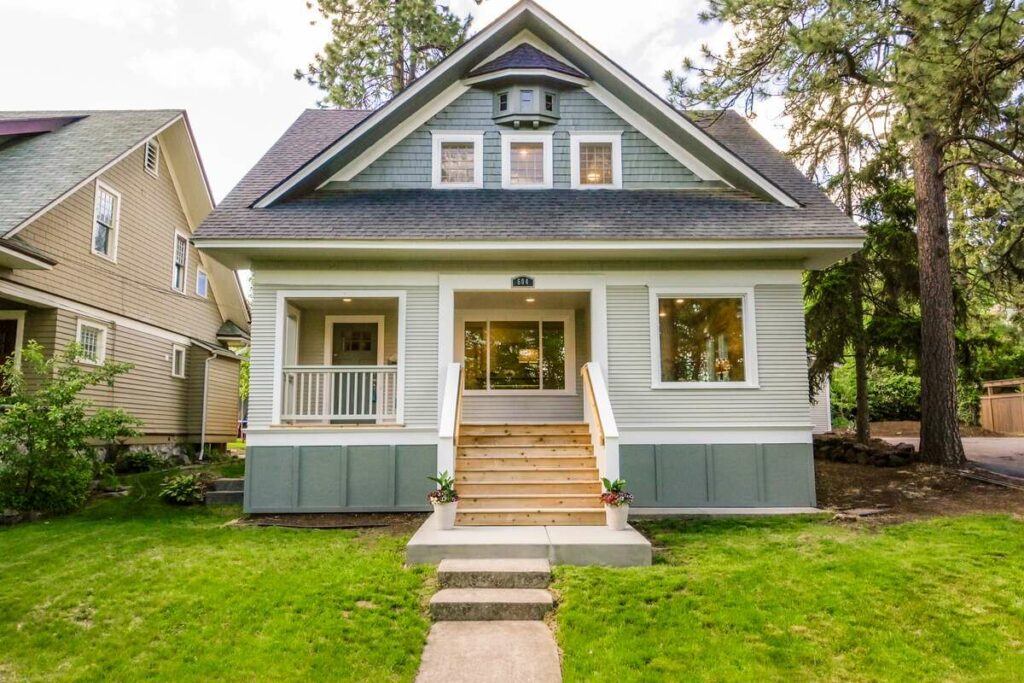
Ok so you’ve got all your ducks in a row and you are almost ready to buy a home but there’s one big hurdle left to overcome – the down payment. For many potential first time home buyers, saving up for a minimum down payment of 3% or 5%, let alone 20% down, can seem like an impossible task. But today, don’t worry because with Andes Mortgage’s 1% down payment options, you can make your dream of homeownership a reality. See today’s mortgage rates in Atlanta, GA. Start here: Why is a 1% Down Payment Option Important for First-Time Homebuyers But before we dive into the details of these 1% down payment options, let’s take a quick look at why they’re such game changers. Traditionally, the down payment has been a major roadblock on the path to homeownership. It’s often the biggest, heaviest stone that prospective buyers have to push uphill. For first-time homebuyers, the minimum down payment has been 3% for quite some time now. However, even at 3%, if you were buying a $400,000 home, your down payment would need to be $12,000. A sum that is pretty big for many families. But with a 1% down payment option, that sum becomes more achievable. Now, buying a home becomes a lot less “mission impossible” and a lot more “mission probable”. Features of the 1% Down Payment Program With Andes Mortgage’s 1% down payment option, you only need to put down 1% of the home’s purchase price as your down payment. This means that for that same $400,000 home, your down payment would be only $4,000. That’s a significant difference and can make all the difference in being able to afford your dream home. Thanks to our partners in our lending network, the other 2% part of the down payment is a grant that does not have to be repaid. That’s right, you don’t need to worry about coming up with an extra 2% of the purchase price. This exclusive 2% grant is only available through Andes Mortgage and can save you thousands of dollars. The best part? Our 1% down payment option is available to qualified homebuyers In Georgia and Florida for now where we are licensed. But don’t worry, we are working on expanding our program to other states soon. So stay tuned! How to qualify for the 1% down Payment Program The 1% down payment option is available to those who meet certain eligibility requirements. Let’s break down the most important ones: Be a first-time homebuyer: Currently, this program is only available for first-time homebuyers or those who have not owned a home in at least the last 4 years. Minimum 680 credit score This is the minimum credit score required for the 1% down payment program. If your credit score is lower, don’t worry, we have other programs available that might suit your needs. Income restrictions As with any mortgage loan, you need to meet certain income requirements in order to qualify for a home loan. The maximum income to qualify is no more than 80% of the Area Median Income “AMI”. For example, if you are buying a home in Atlanta, Fulton County, Georgia, the area’s median income is $102,900, thus the maximum income you can make to qualify is $82,320. For other areas, you can use Fannie Mae’s Area Median Income Tool. Debt to income ratio A debt-to-income ratio of no more than 43%, This is to ensure that you have the financial capability of repaying your mortgage loan. First-Time Homebuyer course: As a first-time homebuyer, we require you to take an online course that will educate you on the home buying process and provide valuable information to help you make informed decisions. Additional Tips for First-Time Homebuyers While our 1% down payment option can certainly make homeownership more attainable, there are still other expenses and factors to consider when buying a home. Here are a few tips to keep in mind as you navigate the home buying process: Budget for closing costs: In addition to the down payment, there are other fees and expenses that come with purchasing a home, such as appraisal fees, title insurance, and attorney fees. Be sure to budget for these costs on top of your down payment. Consider all expenses: Owning a home comes with additional expenses, such as property taxes, homeowner’s insurance, and maintenance costs. Make sure to factor these into your budget when deciding on a home. Get pre-approved: Before you start house hunting, get pre-approved for a mortgage loan so you know exactly how much you can afford. This will also make the buying process smoother and show sellers that you are a serious buyer. Work with a trusted real estate agent: A good real estate agent can make all the difference in finding your dream home and navigating the buying process. They can also help negotiate prices and terms on your behalf. Be patient: Buying a home is a big decision, so don’t rush into anything. Take your time to find the right home and make sure you are financially prepared for the responsibilities of homeownership. Find mortgage programs in Atlanta, GA. Start here – How to apply for the 1% down payment program Applying for the 1% Down Payment Option with Andes Mortgage is a simple, straightforward process: Initial Inquiry: Reach out to us via phone, email, or through our website’s contact form. Our friendly and experienced loan officers are ready to answer any questions you have and guide you through the process. Pre-Approval: Complete our online pre-approval form. This will give us an initial understanding of your financial situation and determine your eligibility for the 1% down payment program. Document Submission: If pre-approved, you’ll need to provide necessary documents such as proof of income, credit report, and other paperwork. Our team will guide you through what’s required. Homebuyer Course: Enroll in the mandatory first-time homebuyer course. This online course will equip you with essential knowledge about the home buying
2024 Conventional Loan Limits: What You Need to Know

Are you planning on buying a new home or refinancing yoru current one this upcoming year? If so, then you’ll need to know about the 2024 conventional loan limit increases! These changes can have a significant impact on your ability to secure the financing you need for your home purchase or refinance, and it’s essential to understand what’s at stake. We’ll provide you with a comprehensive overview of the forthcoming loan limit increases and how they could affect you. Expect to have all your questions answered and gain a deeper understanding of the topic – we’ll bust through all the financial jargon for you in this post. See today’s mortgage rates in Atlanta, GA. Start here:() What are Conventional Loan Limits? Before we dive into the numbers, let’s talk vocabulary – what are conventional loans and why do they matter? Simply put, these are mortgage loans that are not guaranteed or insured by the government, unlike Federal Housing Administration (FHA) or Veterans Affairs (VA) loans. Conventional loans are often preferred by borrowers who have good credit, a stable source of income, and a sizable down payment – they’re really the go-to for most people. The main purpose of conventional loans is to provide financing for homebuyers who don’t meet the criteria for government-backed loans. Conventional loans also offer more flexibility in terms of loan terms, such as adjustable or fixed interest rates, and the ability to borrow larger amounts. The history of conventional loans dates back to the 1930s, when the Federal National Mortgage Association (Fannie Mae) was created to increase the availability of mortgage credit. In the 1970s, Freddie Mac (Federal Home Loan Mortgage Corporation) was established as a competitor to Fannie Mae. Today, these two government-sponsored enterprises (GSEs) are responsible for purchasing the majority of conventional loans from lenders. So what are loan limits? Essentially, these are the maximum amount of money that a lender can loan to a borrower for a conventional loan, with limits set by the Federal Housing Finance Agency (FHFA) and varying depending on the location of the property. A house in a high-cost area will have a higher limit than in a low-cost area. These limits are adjusted annually by the FHFA to reflect changes in both the housing market as well as inflation. The 2024 Conventional Loan Limits Below, we’ll explain what you need to know about the 2024 conventional loan limits, including the standard and high-cost area limits, and how they might impact you as a borrower Standard Conventional Loan Limits First things first, let’s define what we mean by “standard” loan limits. These are the limits that apply to most of the country, where housing prices are not considered “high-cost” or particularly expensive relative to other areas. The baseline limit for 2024 is $766,550 for a single-family home, which is up from $726,200 in 2023. This means that you can borrow up to $766,550 in most areas without having to go through a “jumbo” loan process, which typically involves stricter underwriting requirements, higher interest rates, and other challenges. It’s worth noting that the baseline limit is not the same everywhere. In certain areas where housing prices are particularly high, the baseline limit can be higher. For example, in Alaska, Hawaii, Guam, and the U.S. Virgin Islands, the baseline limit is $1,149,825 for 2024. This is called a “high-cost area,” and we’ll discuss it in more detail in the next section. So, how do you qualify for a conforming loan? You’ll need to meet certain financial standards, such as a minimum credit score, debt-to-income ratio, and proof of income. The exact requirements can vary depending on the lender and other factors, but generally speaking, you’ll need a credit score of at least 620 and a debt-to-income ratio of no more than 43%. It’s also worth noting that even if you meet the qualifications for a conforming loan, you’ll still want to shop around for the best deal. Different lenders may offer different interest rates, closing costs, and other terms, so it pays to do your research and compare offers before committing to a loan. High-Cost Area Conventional Loan Limits Now, let’s talk about high-cost areas. These are the areas, as mentioned earlier, where housing prices are significantly higher than the national average, which means borrowers in these areas may need to borrow more than the standard limit in order to buy a home. For 2024, the high-cost area limit is $1,149,825 for a single-family home, up from $1,089,300 in 2023. So, what are the benefits and drawbacks of borrowing above the conforming limit? On the one hand, borrowing more may give you access to a wider range of homes and neighborhoods, as well as more competitive interest rates and terms. On the other hand, it can also mean higher monthly payments, a more rigorous underwriting process, and potentially higher interest rates. You should also know that if you do need to borrow above the conforming limit, you’ll likely need to come up with a larger down payment as well. Most lenders require a down payment of at least 10% for jumbo loans, compared to as little as 3% for conforming loans. You’ll need to have more cash on hand, which can be a challenge for some borrowers. Find mortgage programs in Atlanta, GA. Start here: () Borrowing Above the Conventional Loan Limit So, what should you do if you’re considering borrowing above the conforming limit? First, weigh the pros and cons carefully and make sure you’re comfortable with the potential risks and costs. Second, shop around for lenders who specialize in jumbo loans and can offer you the best rates and terms. And third, make sure you have a solid financial plan in place that includes a healthy emergency fund and a realistic budget for your monthly payments. Conventional vs. Other Loan Options If you’re shopping around for a home loan and you’re confused about the myriad of loans available to you, you’re not alone. The good news is that